
You do not need to compete with every business on the internet. You need the right people to find you when they are looking for what you offer. For a small business, that might mean reaching homeowners nearby, buyers researching a specialist product, or companies comparing service providers.
SEO for small businesses starts with making your website useful, understandable, and easy to use. There is no guaranteed route to the top of Google, and results depend on competition, relevance, and your starting point. The following ten recommendations give you a practical foundation without requiring a large marketing team.
1. Choose search terms that match real customer needs
Start with the words customers use in enquiries, emails, and conversations. These often reveal more useful phrases than industry jargon. List your main services, the problems you solve, and any locations you genuinely serve.
For example, an accountant might target “bookkeeping for freelancers in Zurich” rather than the broad term “finance”. The more specific phrase makes the service and audience clear. Search suggestions and related questions can help you expand your list, but they do not prove search volume.
Try this first
Choose one main search topic for each important page. Add closely related terms where they help explain the subject. Avoid squeezing the same phrase into every sentence; readable, specific language is more useful than repetition.

2. Match each page to the reason behind the search
Search intent means what someone wants to achieve. A person searching “how to repair a dripping tap” probably wants instructions. Someone searching “emergency plumber Basel” is more likely to need immediate professional help. Those searches call for different pages.
Look at the results for your target phrase. Are they mostly service pages, product listings, tutorials, or comparisons? Use that pattern to understand expectations, not to copy competitors.
For a service enquiry, explain what you do, who you help, where you work, and how to contact you. For an informational search, answer the question directly before suggesting a relevant next step. Do not make visitors work through a sales pitch to find a basic answer.
3. Give your main services their own useful pages
A single page listing everything you offer can leave both visitors and search engines with too little detail. Create separate pages for genuinely distinct services when each deserves a clear explanation.
A cleaning company could have pages for office cleaning, end-of-tenancy cleaning, and regular home cleaning. Each should describe the work included, practical arrangements, common questions, and a relevant contact option.
Avoid producing dozens of near-identical pages that only swap a town name. A location page should offer real local value, such as service coverage, project examples, or specific booking information. Start with your most important service and make that page genuinely helpful before expanding.
4. Write clear page titles and useful descriptions
Your page title should tell people what the page offers. Lead with the subject and add your business name where it fits naturally. “Office Cleaning in Bern | Example Cleaning” is clearer than “Welcome to Our Website”. Give important pages distinct titles.
Write a short meta description that summarises the page and gives a truthful reason to visit. Google may generate a different search snippet, and a meta description is not a direct ranking factor. It can still help communicate the value of your page when shown.
Use one clear main heading and organise the content with descriptive subheadings. Titles and headings should agree with the actual page, rather than promise something it does not deliver.
5. Make your local business information dependable
If your business meets Google’s eligibility requirements, claim and maintain a Google Business Profile. Choose an accurate business category and keep your hours, phone number, website, and services current. Service-area businesses should follow Google’s address-display rules rather than inventing a public office.
Check that your contact page and relevant directory listings contain consistent information. A customer should not have to guess which phone number or opening time is correct.
Ask customers for honest reviews without incentives or pressure, and do not ask only those likely to leave positive feedback. Respond professionally to both praise and criticism. A bakery, for example, can also keep holiday opening hours and recent shop photos up to date.
6. Improve the experience on a phone
Open your website on your own phone and complete a common customer task. Can you read the text, compare services, and submit an enquiry without zooming or fighting pop-ups? Fix obvious frustrations before adding more features.
Resize oversized images, use suitable compression, and remove unnecessary scripts or plugins carefully. Back up the site and test changes before applying them to a live business website.
Google PageSpeed Insights can highlight performance issues, but a perfect score is not the business goal. Prioritise problems that affect real visitors. For a restaurant, a readable menu and an easy reservation process matter more than an elaborate animation that delays the page.
7. Check that Google can discover important pages
Google Search Console is a free tool for understanding how Google encounters your website. Verify your site, submit its XML sitemap if available, and inspect key URLs to check whether they are indexed. A sitemap helps discovery; it does not guarantee inclusion.
If a page is missing, check for accidental noindex settings, broken links, redirects, or access restrictions. Ask your developer for help before changing technical settings you do not understand.
Focus on pages that should appear in search, such as your main services and useful articles. Not every URL belongs in Google’s index. Account pages, internal search results, and duplicate URLs may reasonably be excluded.
8. Publish answers drawn from your experience
Useful content starts with questions your customers actually ask. A bicycle shop could explain how to choose a commuter bike, what a basic service includes, or when worn tyres need replacing. Each topic connects expertise with a real buying or maintenance decision.
Add details that generic articles cannot provide: original photos, clear process explanations, practical limitations, and examples from your work. Obtain permission before sharing customer information or identifiable project details.
You do not need to publish every day. A manageable schedule of well-developed articles is preferable to a stream of repetitive posts. Review older content when prices, services, or advice change, and remove claims you can no longer support.
9. Connect related pages and earn relevant mentions
Internal links help visitors move from a question to the next useful page. An article about choosing flooring could link to your installation service and a relevant project example. Use descriptive link text such as “hardwood floor installation”, rather than repeating “click here”.
Also look for legitimate opportunities for other websites to mention your business. A trade association profile, supplier directory, or local partnership may make sense when it is relevant to your work.
Do not buy ranking links or join schemes designed to exchange links at scale. Focus on relationships and resources that would be worthwhile even without an SEO benefit. Relevance and credibility matter more than collecting an impressive-looking link count.
10. Measure enquiries, not just positions
Rankings vary by query, location, and other factors. They are useful context, but they do not tell you whether your website is attracting suitable customers. Review Search Console clicks, impressions, and search queries alongside actual business outcomes.
Build a simple monthly review
Record which pages bring relevant search visits and which generate enquiries, bookings, or purchases. Use analytics and conversion tracking where appropriate, with consent and privacy requirements handled correctly. Even asking new customers how they found you can add useful context.
Compare meaningful periods and allow for seasonal demand. If a service page attracts visitors but few enquiries, investigate its offer, clarity, and contact process. Make focused changes and record when you made them; avoid changing everything at once.
Conclusion: start with the pages that matter most
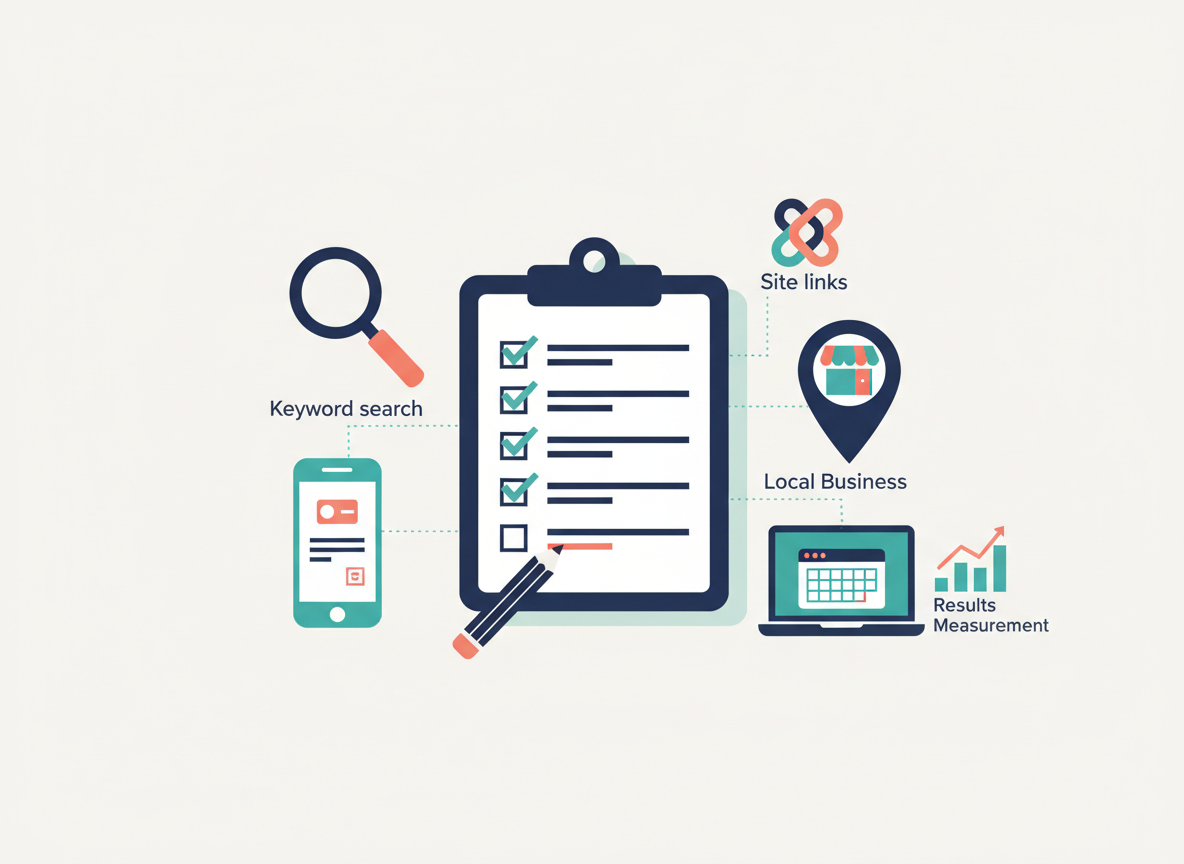
Effective SEO for small businesses is an ongoing process of answering customer needs and removing obstacles. Start with one valuable service page, check your local information, and establish a simple way to measure results. Then improve the next priority. Steady, informed work gives you a stronger foundation than chasing shortcuts or promises of instant rankings.


