
Because even IT sometimes forgets what really makes mail arrive
In this day and age of AI, everyone tends to know everything and … nothing. Because without knowing the basics you can’t ask the right questions and you won’t see the full picture. E-Mail is one of those topics that seem ‚basic‘ on the surface, so when it’s not working, it helps to take a step back and think about what makes an e-mail arrive in your inbox and what can go wrong (hint: a lot). This post will point you in the right direction. Feel free to send the link to your AI of choice for further analysis… 🙂
1. Thou shalt not send from random domains
Just because you can type becauseilikeit@whatever.com doesn’t mean you should.
The receiving server checks whether that domain actually authorizes you — and if not, your message shall be cast into the spam abyss.
2. Thou shalt not send from .local, .lan, or .internal
If the domain isn’t visible on the public Internet, it doesn’t exist to anyone but you.
“@company.local” belongs safely inside your LAN, not wandering lost through the outside world.
3. Respect thy SMTP server
Your SMTP server is not a free-for-all.
It enforces who may send, from where, and as whom.
If it rejects your made-up sender address, take it as mercy, not punishment.
4. Authenticate thy domain
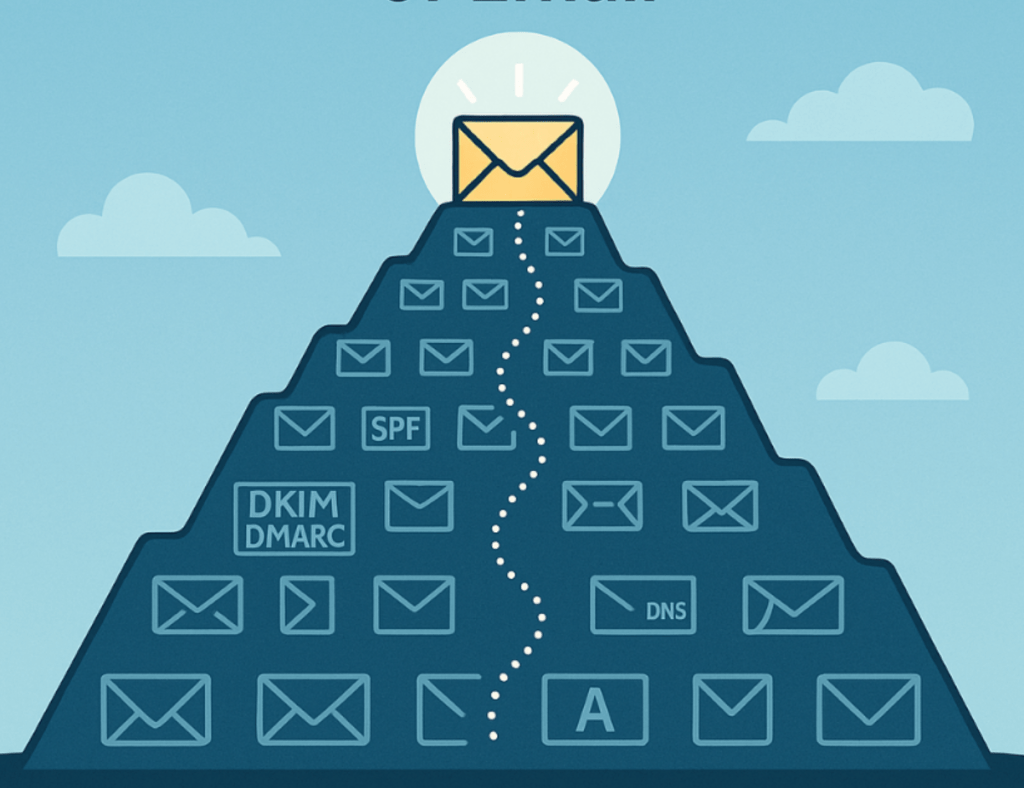
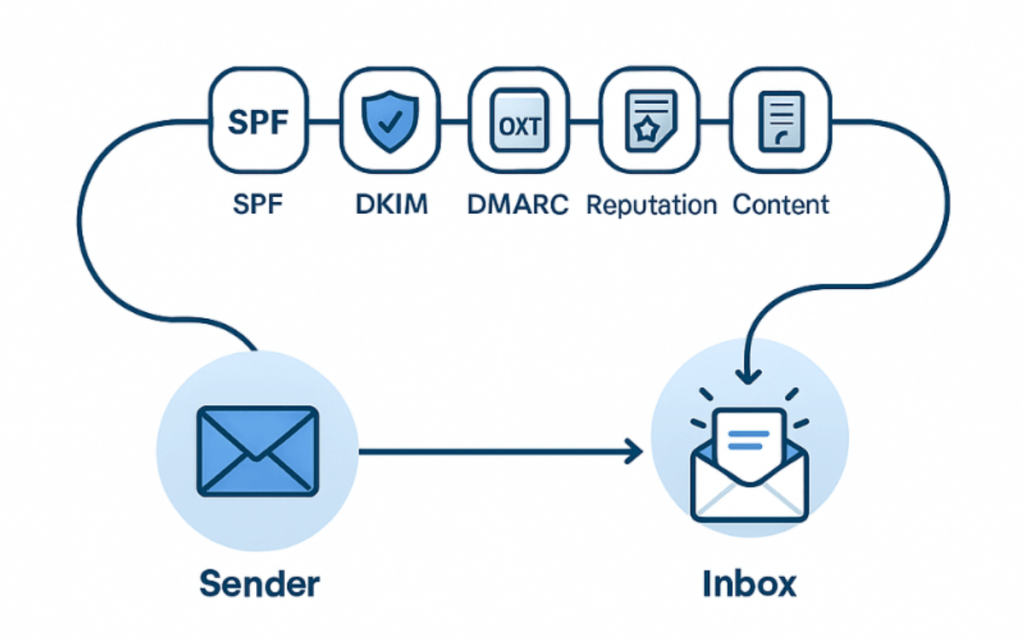
SPF, DKIM, and DMARC are the holy trinity of trust.
Without them, your emails are just unsigned scrolls drifting in the digital wind — and spam filters have no reason to believe they’re genuine.
5. Use the right sender — even if it’s “noreply”
If you’re sending mail from your own domain, a noreply@yourcompany.com or notifications@yourcompany.com is perfectly fine.
But if you’re hosting an app for other organizations, send not their messages from your address, nor yours from theirs.
Either use a delegated subdomain (like mailer.client.com) or make the sender clearly your own:
From: “Client A via HostPlatform”
<noreply@hostplatform.com>
Alignment brings peace; confusion brings spam.
6. Delegate subdomains wisely
The wise host asks each client for a subdomain — mailer.client.com — and manages its DNS.
Thus can SPF, DKIM, and DMARC be aligned without touching the client’s root zone, and deliverability shall flourish.
7. Guard thy reputation
A tainted IP or domain is an outcast forever.
Send only what people expect and want.
Clean lists, clear opt-ins, and steady volumes keep thy good name intact.
8. Write content fit for humans (and filters)
ALL CAPS and ten exclamation marks shout “SPAM!” louder than any botnet.
Keep your message natural, relevant, and trustworthy.
Use real links that make sense — not strange redirectors or internal URLs that look like phishing.
If your message comes from yourcompany.com, but the link points to something like app.internal.local/login, it raises every alarm bell in the system.
Real-life example:
Someone once rolled out a new internal tool that automatically emailed staff from an internal domain.
The emails included login links leading to an unfamiliar address and asked for credentials — without any prior announcement.
Within hours, users were reporting phishing attempts, and the mail system had already decided the messages belonged in Spam.
The takeaway: when your email looks suspicious and nobody knows about it, people (and filters) will treat it that way.
Match your links to your brand, use clear language, and communicate before sending anything that could look like a login request.

9. Keep thy DNS and TLS in order
A valid reverse DNS, a proper HELO name, and encrypted delivery please the filters.
Neglect them, and your mail may perish before reaching the promised inbox.
10. Blame not the recipient first
When your mail lands in junk, do not cry “Outlook hates me!”
Run your DMARC reports, check your alignment, and fix your own house first.
Deliverability is earned, not granted.
And if in doubt — consult with your email admin first, send later.
For they are the keepers of DNS truth and may save you from many ticket storms.
Final Words from the Inbox
In the world of IT, email can be considered ancient — yet it remains one of the most successful cornerstones of a distributed environment.
There is no single source of truth, only countless systems choosing to cooperate.
Every message travels through a web of servers, checks, and trust decisions that only work because everyone plays by the same rules.
Respect those rules, and your mail will reach its destination.
Ignore them, and it will quietly disappear into the void, or even worse, the Spam folder.

 ClickCoach - Approach the Coach